23 posts tagged with "Instamobile"

Production-ready React Native templates

View All Tags

Expo Router API Routes and EAS Hosting: A Backend for React Native Apps

· 6 min read
Full Stack Developer
Last updated on June 22, 2026

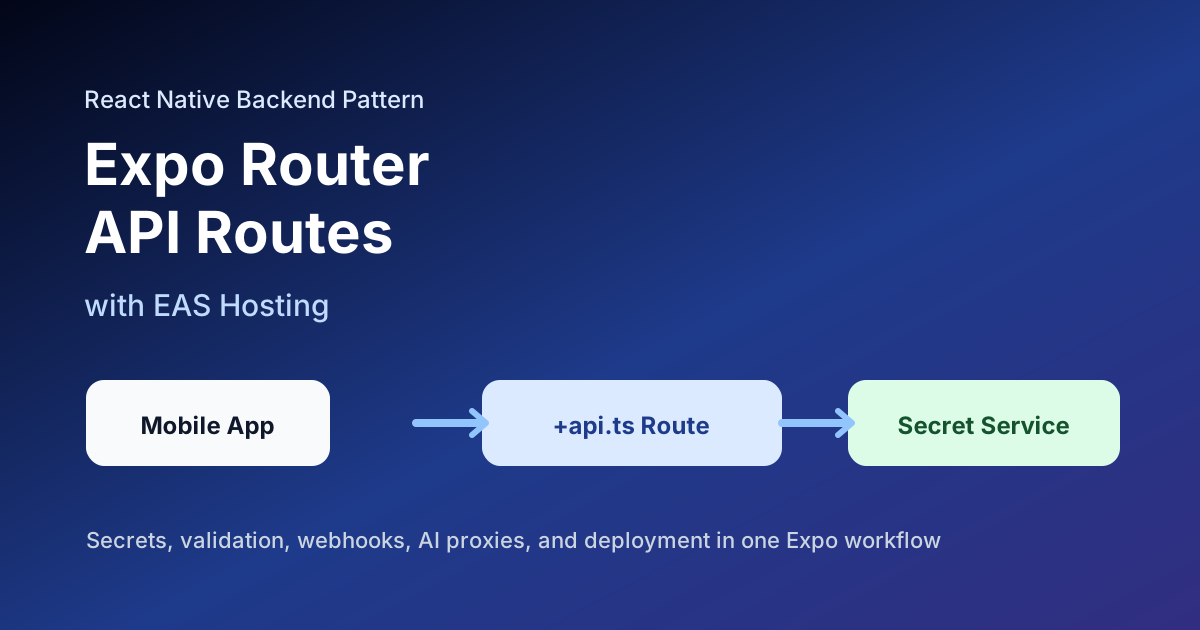
Expo Router API routes give React Native teams a practical middle ground between "everything is client-side" and "we need a separate backend project before we can ship." With EAS Hosting, those routes can be deployed alongside an Expo Router web app and used for server-side work such as secrets, validation, webhooks, AI calls, and small backend endpoints.

Expo Router API routes and EAS Hosting backend architecture

Firebase AI Logic vs OpenAI Backend for React Native AI Apps

· 7 min read
Full Stack Developer
Last updated on June 22, 2026

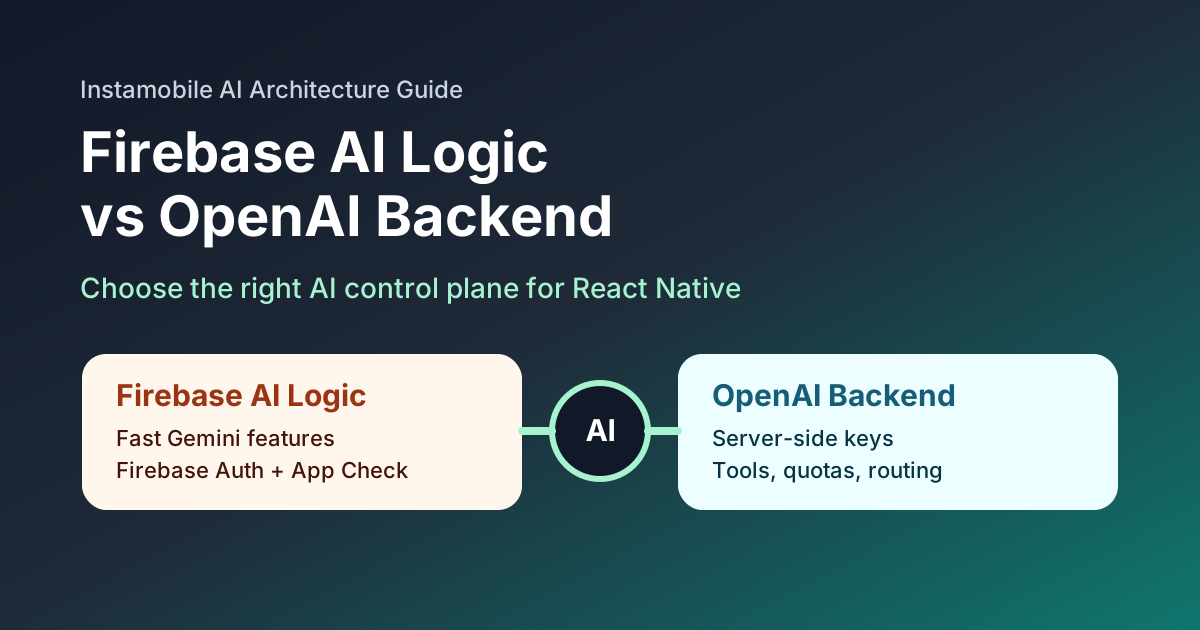
React Native teams now have two practical ways to add serious AI features to a mobile app:

  • call Gemini models through Firebase AI Logic from a Firebase-aware app;
  • keep AI orchestration on your own backend and call OpenAI from the server.

Both approaches can be correct. The wrong choice is usually the one that ignores secrets, user identity, App Store release cycles, cost controls, and how quickly your AI product will evolve.

Comparison of Firebase AI Logic and OpenAI backend architecture for React Native

Passkeys in React Native: Passwordless Login on iOS and Android

· 6 min read
Full Stack Developer
Last updated on June 22, 2026

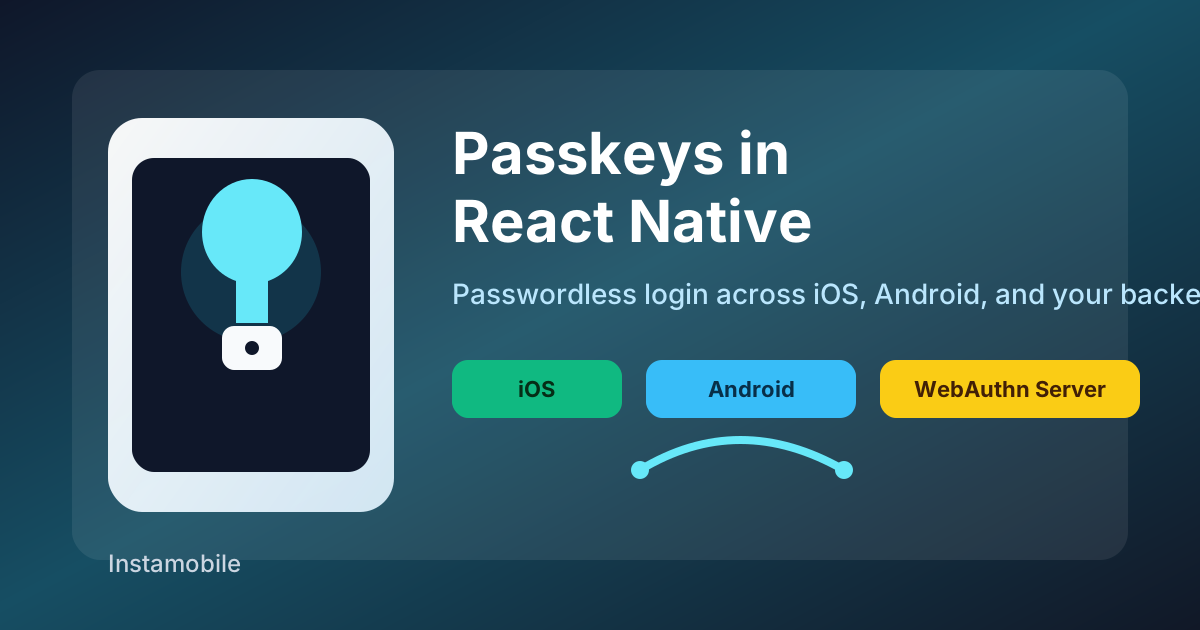
Passkeys are becoming the default answer to a long-standing mobile product problem: users dislike passwords, password reset flows are expensive, and weak credentials create security risk that your app has to absorb later.

For React Native teams, passkeys are not just a new login button. A production implementation touches native platform APIs, your backend authentication model, domain association files, account recovery, QA devices, and store release testing.

Passkey authentication architecture for React Native apps

React Native App Store Privacy Checklist 2026: Apple and Google Play

· 6 min read
Full Stack Developer
Last updated on June 22, 2026

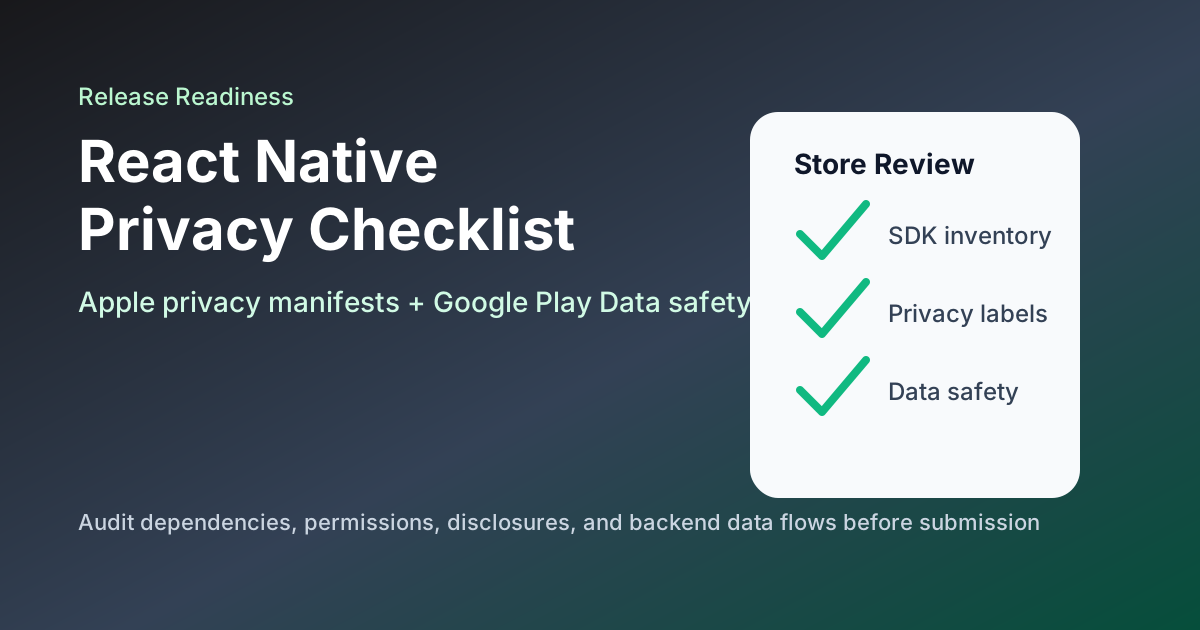
Privacy review is now part of mobile engineering, not just legal paperwork. React Native apps ship with native SDKs, analytics tools, crash reporters, payment providers, push notification services, authentication providers, and backend integrations. Every one of those can affect what you must disclose to Apple and Google Play.

React Native app store privacy checklist for Apple and Google Play

React Native Subscriptions in 2026: RevenueCat vs react-native-iap vs Stripe

· 6 min read
Full Stack Developer
Last updated on June 22, 2026

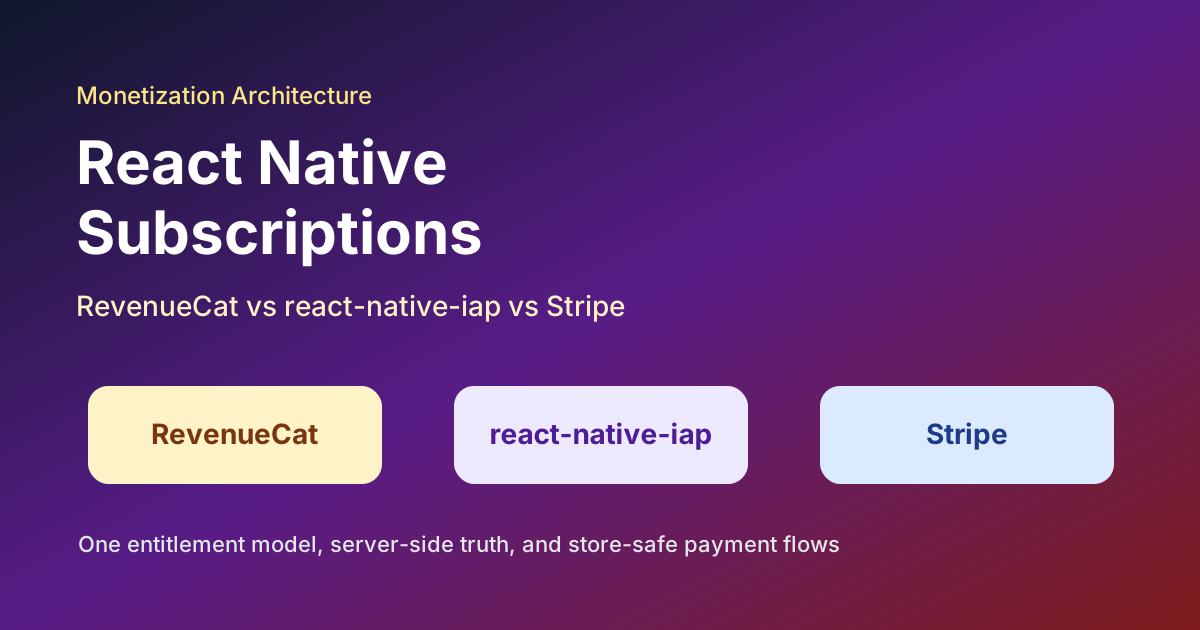
Subscriptions look simple in product mockups: show plans, take payment, unlock premium features. In a real React Native app, subscriptions touch StoreKit, Google Play Billing, receipt validation, renewals, refunds, grace periods, intro offers, backend entitlements, app review, and customer support.

React Native subscription architecture comparing RevenueCat, react-native-iap, and Stripe

Instamobile React Native Templates Are Now TypeScript-First

· 6 min read
Full Stack Developer
Last updated on May 23, 2026

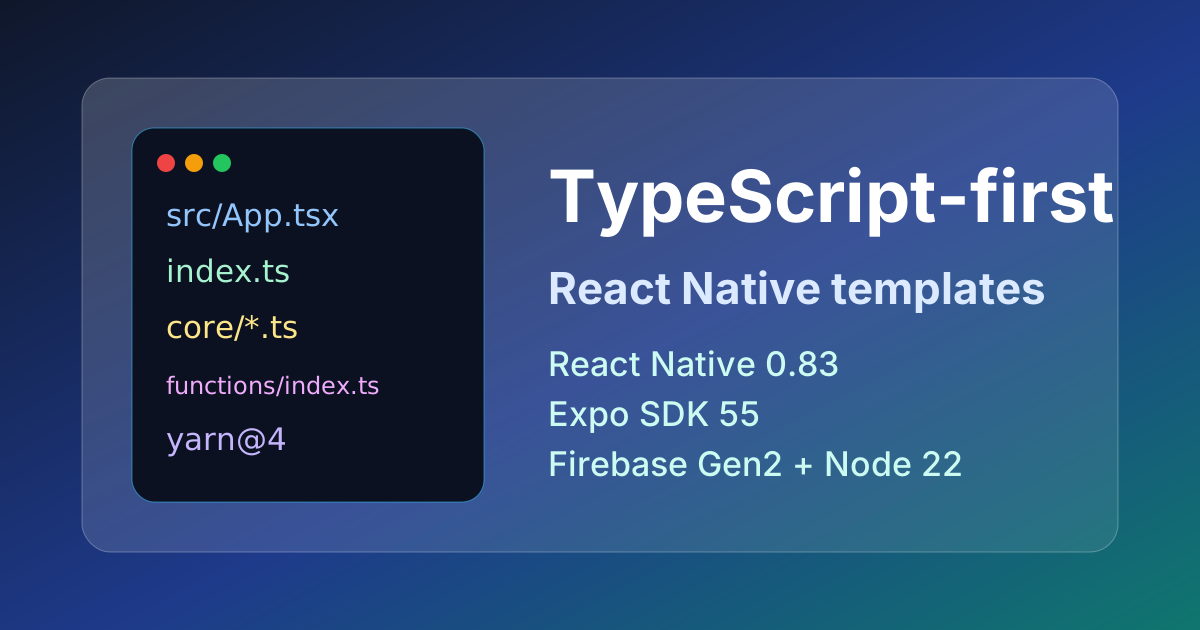
We have completed a major update across the current Instamobile React Native templates. The new baseline is TypeScript-first, aligned with the latest React Native and Expo ecosystem direction, and documented with a cleaner path from setup to production verification.

Instamobile TypeScript-first React Native update

What LiteLLM Means for React Native App Teams

· 7 min read
Full Stack Developer
Last updated on March 25, 2026

According to the official LiteLLM docs, LiteLLM can act as a Python SDK or as a proxy server that exposes 100+ models through an OpenAI-compatible format. The same docs highlight routing and fallbacks, spend tracking, budgets, virtual keys, logging, and rate limiting. That is exactly why tools like LiteLLM are showing up in more production stacks for AI chat, search, recommendations, and assistant features.

For React Native teams, that also means an AI gateway is no longer just backend plumbing. It is part of your release architecture. If the gateway is exposed, misconfigured, or compromised, your app can leak provider access, burn through budget, or break a core feature without a new binary release ever going through the App Store or Play Store.

LiteLLM and React Native AI app architecture

Top 10 React Native and Expo Updates to Track

· 10 min read
Full Stack Developer
Last updated on May 23, 2026

This stretch has been one of the busiest periods the React Native ecosystem has seen in years. The important changes are not limited to framework releases. They also affect build pipelines, performance tooling, Expo workflows, and the platform requirements that determine whether your app can ship at all.

If you are building or maintaining a production app, these are the updates worth tracking first.

React Native and Expo ecosystem updates across architecture, OTA delivery, CI/CD, and store policy

How to Launch a Mobile App MVP in Under 48 Hours Using AI-Native Templates

· 6 min read
Full Stack Developer
Last updated on February 14, 2026

How to launch a mobile app MVP in under 48 hours

The old three-month development cycle is dead. If you are not launching in days, you are losing to teams that are.

The reason is simple: infrastructure is usually most of the work and none of the differentiation. Authentication, database wiring, server endpoints, push setup, subscription logic, and release plumbing can consume most of your schedule before users even touch your core feature.

This guide shows a better path: use Instamobile full-stack templates with Firebase Functions, launch your first version in one weekend, and reserve your engineering time for what users actually pay for.

By the end of this post, you will know exactly how to skip boilerplate hell and go straight to store-ready MVP execution.

The Ultimate Guide to React Native App Templates (Free, Premium & Production-Ready)

· 14 min read
Full Stack Developer
Last updated on May 6, 2026

React Native templates are no longer just time-saving shortcuts. For serious teams, they are a strategic decision that affects architecture quality, release velocity, and long-term maintenance.

The problem is not finding templates. The problem is picking the right abstraction level for your product stage, then customizing it without destroying the advantages that made templates attractive in the first place.

This guide is written for developers and technical founders who want a clear, honest framework for choosing between free starters, premium kits, and production-ready full app templates.

It also covers the operational reality after you pick one: project planning, backend integration, UI patterns, performance tuning, testing, release, and scaling a portfolio of apps.

If you are evaluating options, start by scanning the current React Native templates collection and come back to this guide with your shortlist.

Related supporting guides: Best Free React Native App Templates for free starters, React Native Starter App for starter-kit product thinking, and Best Mobile App Templates for the broader multi-platform template landscape.

Workflow from idea to template selection, launch, and iteration