12 posts tagged with "Expo"

Articles about Expo development platform

View All Tags

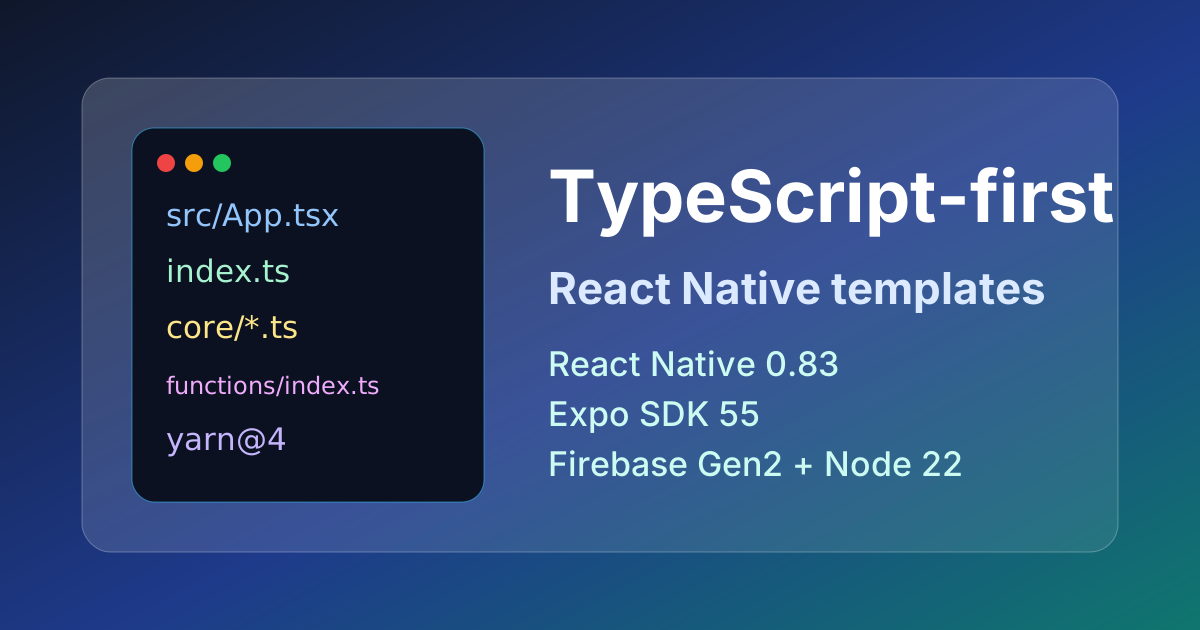
Instamobile React Native Templates Are Now TypeScript-First

· 6 min read
Full Stack Developer
Last updated on May 12, 2026

We have completed a major update across the current Instamobile React Native templates. The new baseline is TypeScript-first, aligned with the latest React Native and Expo ecosystem direction, and documented with a cleaner path from setup to production verification.

Instamobile TypeScript-first React Native update

Top 10 React Native and Expo Updates to Track

· 10 min read
Full Stack Developer
Last updated on March 22, 2026

This stretch has been one of the busiest periods the React Native ecosystem has seen in years. The important changes are not limited to framework releases. They also affect build pipelines, performance tooling, Expo workflows, and the platform requirements that determine whether your app can ship at all.

If you are building or maintaining a production app, these are the updates worth tracking first.

React Native and Expo ecosystem updates across architecture, OTA delivery, CI/CD, and store policy

Mobile Apps with AI: Generate Native Apps in Minutes

· 7 min read
Full Stack Developer
Last updated on December 1, 2025

Mobile Apps with AI: Generate Native Apps in Minutes

Have You Dreamed of Becoming an App Builder? Now You Can!

Mobile app development traditionally requires extensive coding, UI/UX design, and many hours of work. But with modern AI app builders you can generate polished, native React Native/Expo apps in minutes. This post shows how I used Rork — an AI mobile app generator — to produce 8 complete React Native templates quickly. If you're searching for "React Native app builder", "AI mobile app generator", or "generate native apps", this guide gives concrete examples, file structures, and a fast way to start building.

Galio Framework - Overview & How to Use It

· 11 min read
Full Stack Developer
Last updated on October 24, 2025

galio react native framework

Galio is a UI toolkit and component framework for React Native that provides a consistent set of ready-made, themeable building blocks (buttons, cards, text, inputs, nav bars, etc.) so you can prototype and ship mobile UIs faster. The galio repository includes the core components and a lightweight theme system in src/theme (see colors.tsx, sizes.tsx, index.tsx) plus components under src/ such as Block, Button, Text, Input, Card, Avatar, NavBar and more.

Learn more on the official site: galio.io and browse the source and examples on GitHub: github.com/galio-org/galio.

Debugging Network Requests in React Native: Fetch, Axios, and DevTools

· 6 min read
Mobile Developer
Last updated on May 18, 2026

Debugging React Native network requests

Network bugs in React Native usually fall into a few categories: the request never leaves the device, the server rejects it, the response shape is different from what the app expects, or the UI keeps using stale data. The fastest way to debug them is to inspect the request, log safely, reproduce on the platform that fails, and verify the server-side trace.

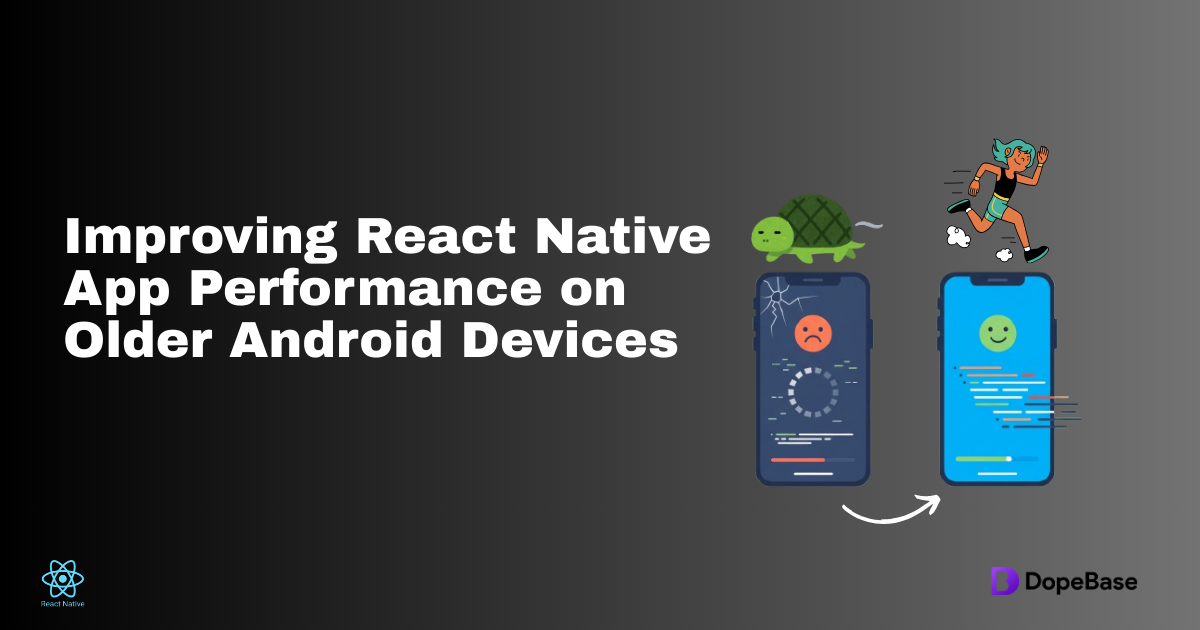
Improving React Native App Performance on Older Android Devices

· 6 min read
Mobile Developer
Last updated on May 18, 2026

Improving React Native performance on older Android devices

Older Android phones expose every expensive choice in a React Native app: heavy startup work, oversized images, slow lists, chatty network calls, JS-thread animations, and debug-only assumptions. The goal is not to chase one magic setting. The goal is to measure on real hardware, reduce work on the critical path, and ship a release build that keeps memory, CPU, and frame time under control.

React Native Upgrade Guide: Fixing Breaking Changes and Dependency Issues

· 6 min read
Mobile Developer
Last updated on May 18, 2026

React Native upgrade guide

React Native upgrades are safest when you treat them as a controlled migration, not a package bump. The work spans JavaScript dependencies, native iOS and Android project files, Expo modules, build tooling, runtime versions, and QA. This guide gives you an evergreen upgrade path that works for bare React Native apps, Expo apps, and production templates.

React Native REST API Integration: Fetch, Post, and Optimize Requests

· 6 min read
Mobile Developer
Last updated on May 18, 2026

React Native REST API integration

Most production React Native apps talk to at least one REST API: auth, profiles, feeds, search, orders, payments, media, notifications, analytics, or admin workflows. The important decision is not whether you use Fetch or Axios. The important decision is whether every request goes through a typed, observable, cancellable, and secure API layer.

React Native Memory Leak Fixes: Identify, Profile, and Prevent Leaks

· 6 min read
Mobile Developer
Last updated on May 18, 2026

React Native memory leak fixes

Memory leaks in React Native usually come from resources that outlive the screen that created them: timers, subscriptions, unresolved requests, sockets, navigation listeners, heavy lists, image caches, and native module handles. The fix is not a single package. It is a repeatable loop: reproduce the leak, profile it in a realistic build, remove the retained reference, and verify that memory returns to a stable baseline.

React Native FlatList Optimization: Smooth Scrolling for Large Lists

· 6 min read
Mobile Developer
Last updated on May 18, 2026

React Native FlatList optimization

FlatList is fast when each row is cheap, keys are stable, virtualization is tuned for the screen, and the data layer avoids unnecessary re-renders. It becomes slow when rows contain heavy images, anonymous render functions, unstable item references, eager API calls, and too many mounted views. This guide focuses on practical fixes you can apply to production feeds, chats, catalogs, and marketplace screens.